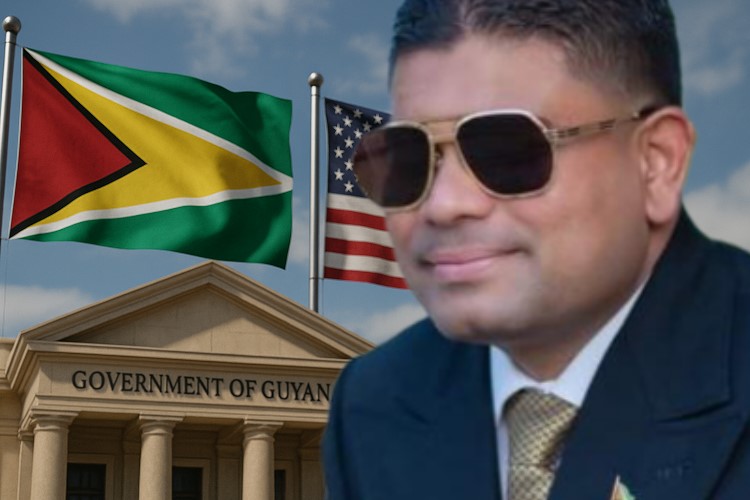
In June 2024, the United States Department of the Treasury’s Office of Foreign Assets Control (OFAC) sanctioned Guyanese businessman and presidential candidate Azruddin Mohamed, his father Nazar, and their business interests for alleged large-scale public corruption. This action, while seemingly aimed at one man, casts a long, unsettling shadow over Guyana’s political, legal, and social landscape.
Mohamed has not been indicted or convicted in any court, American or Guyanese. That fact must remain at the forefront. The absence of judicial proceedings highlights a dangerous trend: a sovereign nation reacting punitively to foreign accusations without offering its citizens due process. At stake is not just the political future of one man, but the democratic maturity and constitutional integrity of an entire nation.
The Power and Politics Behind OFAC Sanctions
Make no mistake: OFAC sanctions are serious. They are not handed down lightly. The U.S. government does not impose them without a significant intelligence trail. However, they are also political tools, relying on classified information that has never been tested through adversarial legal proceedings.
When such tools are used against a presidential candidate in a small, resource-rich country like Guyana, the implications are enormous. It signals not only Washington’s view of Mohamed but also an indirect condemnation of the system that enabled him. The question is: who in Guyana’s government helped make this possible? OFAC has stated clearly that this level of corruption is systemic.
The Government’s Reaction: Rule of Law or Political Weaponry?
Instead of launching a credible investigation or reinforcing the public’s trust in legal institutions, the ruling People’s Progressive Party (PPP) administration moved with alarming speed to impose its own punitive measures:
- Bank accounts were closed – not just for the Mohameds, but also for associates.
- State contracts were revoked – without explanation or legal review.
- Security privileges and firearm licenses were stripped – leaving a high-profile family exposed in a society where wealth makes you a target.
These are not neutral administrative actions; they are acts of political warfare masquerading as compliance and national interest. Not a single charge has been filed under Guyana’s criminal code. No public inquiry has been launched. No senior government figure has been questioned or named. If OFAC’s case rests on collusion with officials, why has only one side been punished?
What Should Citizens Do?
- Demand Due Process For Everyone
Guyanese democracy cannot outsource its justice to Washington. If Mohamed has committed crimes, let him be prosecuted fairly, transparently, and in his local jurisdiction. Anything less would betray Guyana’s legal system and undermine its sovereignty. - Insist on Equal Accountability
If the U.S. claims are true, then senior government officials, ministers, procurement officers, and state bank executives must also be complicit. Where are the resignations? The investigations? The press conferences? Silence is no longer an option. - Challenge Political Suppression Masquerading as Ethics
Stripping a political candidate of protection and economic mobility without trial is a form of extrajudicial punishment. That’s not the behavior of a mature democracy; it’s the tactic of authoritarian regimes. - Safeguard the Electoral Process
Whether Mohamed is guilty or not, his right to run for office should not be decided by administrative fiat or foreign designation. That right belongs to the voters. Denying that choice through bureaucratic suppression is a violation of democratic norms.
A Bigger Picture: The Sovereignty Test
This is not about defending Azruddin Mohamed, the man. It is about defending the integrity of Guyana’s institutions. If we allow accusations, no matter how serious, to substitute for trials, we open the door to a dangerous precedent where allegations become convictions and silence replaces scrutiny.
The PPP government’s reaction reveals an unsettling truth: rather than launch a full-scale anti-corruption review, it chose to isolate and neutralize a political opponent. Why? Because investigating the full network could expose its own vulnerabilities.
This is also a test of Guyana’s relationship with the global community. Are Guyanese a nation whose political future is dictated by external pressure? Or are Guyanese willing to stand up for the principle that only the people of Guyana decide who governs Guyana?
Conclusion: Voters Must Be Watchful, Not Wielded
Voters have a duty to themselves and to the republic, to see through the fog of politics and international influence. They must ask:
- Why hasn’t the Guyanese government initiated its own transparent inquiry?
- Why haven’t other alleged collaborators within government been named or investigated?
- Why is there punishment without charge, exclusion without evidence, silence where there should be accountability?
Azruddin Mohamed’s candidacy may be damaged, but whether it survives or falls should be left to the voters, not foreign governments, and certainly not a political elite afraid of its own shadows.
This is a moment not just of political choice, but of constitutional clarity. Injustice dressed as reform is still injustice. Democracy without due process is still tyranny.
Let Guyanese not be a nation that confuses punishment with justice. Let Guyana be a nation that upholds the law. for everyone.