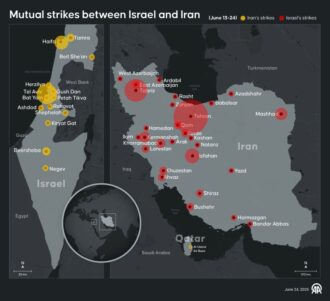
The joint U.S.–Israeli strike against Iran on February 28, 2026, represents more than a continuation of long-standing hostilities. It marks a potential inflection point in the regional power matrix, one where the traditional alignment between Washington and Jerusalem may face its most severe stress test in decades.
Prime Minister Benjamin Netanyahu’s strategy for regional dominance has always revolved around neutralizing Iran’s military and nuclear capacity, thereby consolidating Israel’s status as the Middle East’s preeminent power. For years, this ambition aligned with Washington’s interests. Yet the geopolitical landscape of 2026 is more fragmented. The resurgence of Donald Trump’s administration brings an America attempting to balance economic nationalism, energy security, and the restoration of strained global alliances.
The U.S. Strategic Dilemma
The United States faces a complex web of constraints. The prolonged tariff wars started by Trump in 2018 weakened export stability and inflated domestic costs. Simultaneously, China capitalized on these disruptions, capturing market share in strategic sectors and deepening its trade and infrastructure reach across Asia and Africa. At the same time, the U.S. remains enmeshed in its commitments to the Five Eyes partnership and to NATO allies, who have grown increasingly skeptical of unilateral American moves in the Middle East.
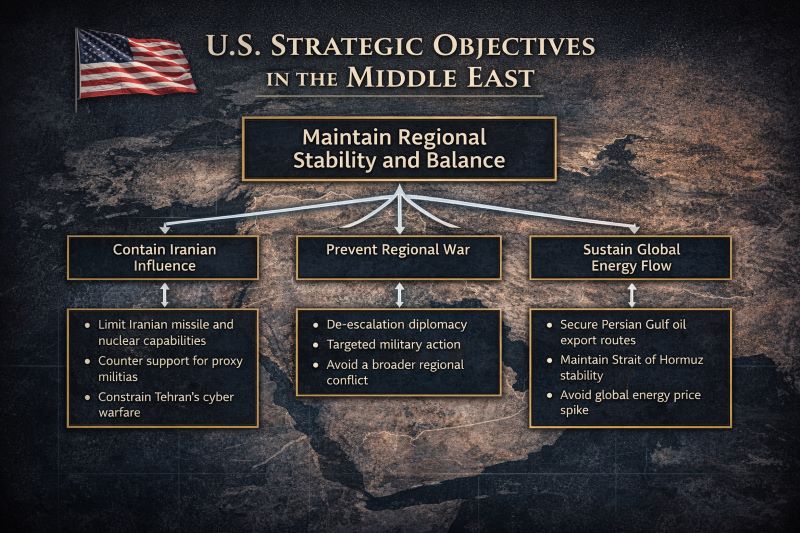
Against this backdrop, a direct confrontation with Iran risks further alienating oil-producing states in the Gulf, destabilizing global markets already under inflationary pressure, and eroding Washington’s credibility as a stabilizing actor. A protracted regional war could trigger cascading energy shocks and political instability that undermine U.S. interests far beyond the Middle East.
Israel’s Risk Calculus
Israel’s military offensive serves both its immediate security imperatives and Netanyahu’s domestic agenda. Yet it exposes Israel to risks that could exceed its capacity to manage. The traditional deterrence model, based on preemptive action and superior intelligence, now unfolds amid conditions of strategic overextension. If Iran sustains asymmetric pressure through regional proxies or cyber operations, Israel could face an attritional conflict with no clear pathway to resolution.
Perhaps more consequentially, U.S. policymakers may be reassessing the utility of unconditional support. By allowing Israel to test its strategic endurance, Washington could be quietly signaling a recalibration, an effort to realign priorities toward long-term regional stability rather than short-term tactical gains. Such a shift would be consistent with broader efforts to manage the U.S.–China competition and rebuild cooperation with energy partners from Riyadh to Abu Dhabi.
The Trump Variable
Speculation persists that Israel’s leadership holds leverage over President Trump through sensitive information accumulated during previous intelligence exchanges. If true, this dynamic might have influenced the initial decision to engage militarily. Yet the war also provides Trump an opportunity to reset the relationship to demonstrate American autonomy, dispel perceptions of Israeli overreach, and reestablish U.S. primacy in setting the terms of engagement in the Middle East.
Implications and Outlook
In the immediate term, escalation benefits no actor fully. Israel risks military and political exhaustion; Iran faces internal strain but gains diplomatic sympathy; and the U.S. gambles with global credibility. However, for Washington, a limited Israeli setback might paradoxically advance broader objectives, reducing dependence on a volatile ally, rebuilding trust among disaffected partners, and reaffirming America’s role as an arbiter rather than a participant in regional conflicts.
Over the coming weeks, the critical question will be whether the U.S. can leverage this moment to reset the architecture of power in the Middle East, or whether both Washington and Jerusalem have triggered a conflict that erodes their strategic advantages for a generation.