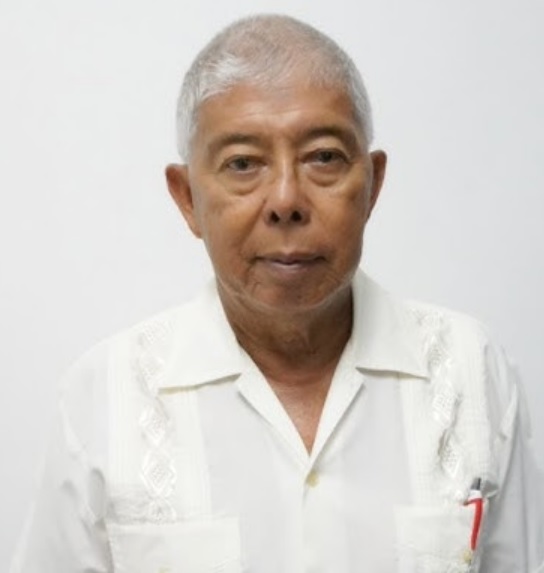
In the latest edition of “Nation Building Guyana Beyond 2030,” the Guyana Business Journal hosted a compelling Father’s Day conversation with renowned entrepreneur and former parliamentarian Stanley Ming. Moderated by Kojo Paris and Professor Terrence Blackman, the discussion explored Guyana’s development path, highlighting the urgent need to transition from planning to implementation.
Stanley Ming introduced himself, reflecting on his humble beginnings, growing up first in Kitty, then later in Campbellville, where his early exposure to business came through working in his parents’ small retail shop. This on-the-job training became the foundation for a lifelong commitment to entrepreneurial excellence and community-driven development.
Ming also shared a personal list of influential figures who shaped his values and national outlook. These included some of Guyana’s most iconic leaders and thinkers: President Forbes Burnham, Dr. Cheddi Jagan, Hugh Cholmondeley, Yesu Persaud, Peter D’Aguiar, David DeCaires, and Miles Fitzpatrick, among others.
He spoke at length about the intellectual stature and strategic vision of Forbes Burnham, noting,
“Forbes Burnham was an intellect; he was highly educated and surrounded himself with very highly educated and competent people.”
Ming credited Burnham with conceptualizing Guyana’s national irrigation system, which he explained was later implemented by skilled engineering firms and supported decades of agricultural development.
“The farming development across Guyana is as a result of what he (Forbes Burnham) started,” Ming said.
In a nod to unity and shared purpose, Ming also praised Dr. Cheddi Jagan, highlighting his collaboration with Burnham in the fight for Guyana’s independence. Jagan, he noted, was the visionary behind the Del Conte Road, a long-planned route from Parika to Bartica designed to unlock vast tracts of arable land for agriculture.
This section of the conversation underscored Ming’s respect for historical leadership that prioritized national development, regardless of political differences. For Ming, the legacy of these figures is not merely political; it is practical, visible in the roads, farmlands, and communities that continue to benefit from their vision.
Ming opened the conversation with a stark observation: “Guyana does not need to be studied anymore.” He referenced hundreds of development plans produced over the decades, many of which remain untouched, noting that political partisanship, rather than a lack of ideas, has stalled progress. Among the plans was a 1970 highway design that laid the foundation for what is now known as the Heroes Highway.
Throughout the discussion, Ming drew inspiration from Lee Kuan Yew, the architect of modern Singapore. He emphasized three essential values for Guyana’s success: meritocracy, pragmatism, and integrity. He noted that, despite having no natural resources and being only a fraction of Guyana’s size, Singapore outpaced global development through disciplined leadership and a national commitment to results over rhetoric.
Fixing Georgetown’s Drainage: A Practical Solution
Demonstrating his trademark hands-on approach, Stanley Ming turned attention to one of Georgetown’s most persistent infrastructure issues: its dysfunctional drainage system. Backed by visual documentation, he presented photographs of blocked canals, overgrown outfalls, and neglected waterways, evidence of a city suffering not from a lack of infrastructure, but from a failure to maintain it.
Ming offered a bold yet practical proposal:
“The entire city of Georgetown can be drained in less than six months if the job is undertaken in a proper manner.”
Rejecting the notion that new infrastructure is the answer, he emphasized the need to clear and maintain what already exists systematically.
“We don’t need any new drains in the city of Georgetown; what we need is the existing drains that are there to be cleared, and it has to be cleared in a systematic way.”
His remarks underscored a larger theme of the discussion: that Guyana’s challenges often stem not from a lack of resources or ideas, but from poor execution and neglect of the basics. For Ming, Georgetown’s drainage woes are emblematic of a national pattern, where maintenance and accountability are too often sacrificed in favor of grand but unsustainable solutions.
Region 3: A Missed Opportunity
Ming identified Region 3 as a key to Guyana’s future, citing its larger size than Georgetown, higher elevation, and vast agricultural potential. He warned that Georgetown could become uninhabitable by 2030 due to sea-level rise and flooding, announcing plans to relocate his business operations to Region 3 by 2027.
He also referenced a little-known German study from 2000 to 2003 that identified 1,300 square miles of prime land between Parika and Linden, larger than the entire island of Trinidad, ready for sustainable development.
Leadership and Legacy
At 74, Ming believes his generation must make way for younger Guyanese leaders with fresh ideas and less baggage.
“Until such time that we stop seeing ourselves as Black people and Coolie people, and Buck people, and Amerindians and Chiney, and become Guyanese we ain’t going to go anywhere.”
He voiced concerns over brain drain, where young professionals leave due to limited opportunity and political gatekeeping. His own business practices reflect his commitment to merit-based hiring, with 70% of his management team comprising women, who are chosen solely based on competence.
Real Impact, Real Communities
Ming shared success stories from Tiger Bay, where his company supported health and education programs, helping students earn national honors and places at top schools. These stories, he said, prove that talent exists everywhere, if people are given the tools to thrive.
Unlocking Guyana’s Intellectual Capital
Beyond his business ventures, Ming maintains a network of experts across disciplines and continues to learn daily. He highlighted Guyanese professionals working in elite roles globally, including those in space and missile programs, proving that Guyana’s most underutilized resource is its people.
In a significant announcement, Ming pledged to digitize and share his personal archive of development plans and research, much of which spans decades. This archive, to be hosted by GBJ and its partners, will become a national resource, a foundation for future policy and implementation.
A Call to Unity: Ming’s Closing Reflection
Stanley Ming ended the discussion with a heartfelt appeal for national unity and collective purpose. As Guyana approaches another election cycle, his words served as both a reminder and a challenge to all citizens at home and in the diaspora to reflect deeply on their individual roles in shaping a more peaceful and inclusive society.
Paraphrasing Stanley Ming, As a Guyanese, how can we each contribute in some small way to ensure that we live in peace and harmony? As we face another election cycle in our homeland, let us pause and reflect. Let us act in ways that will make our national motto, One People, One Nation, One Destiny, not just a saying, but a heartfelt ambition. It must begin with the leaders of our dear land of Guyana and extend all the way to our children, whose hearts and minds need to be nurtured with love and compassion for their fellow human beings.
His closing message echoed the central theme of the conversation: that nation-building begins with unity, integrity, and an unwavering commitment to a shared future, regardless of race, politics, or background.
Conclusion:
Stanley Ming’s conversation laid bare the core problem of Guyana’s development: a nation rich in ideas but poor in execution. His message is clear: the time for talk is over; the time for action is now. With leadership grounded in merit, pragmatism, and honesty, Ming believes Guyana can move beyond 2030 not just with plans, but with real progress.
See Program below; courtesy of Guyana Business Journal